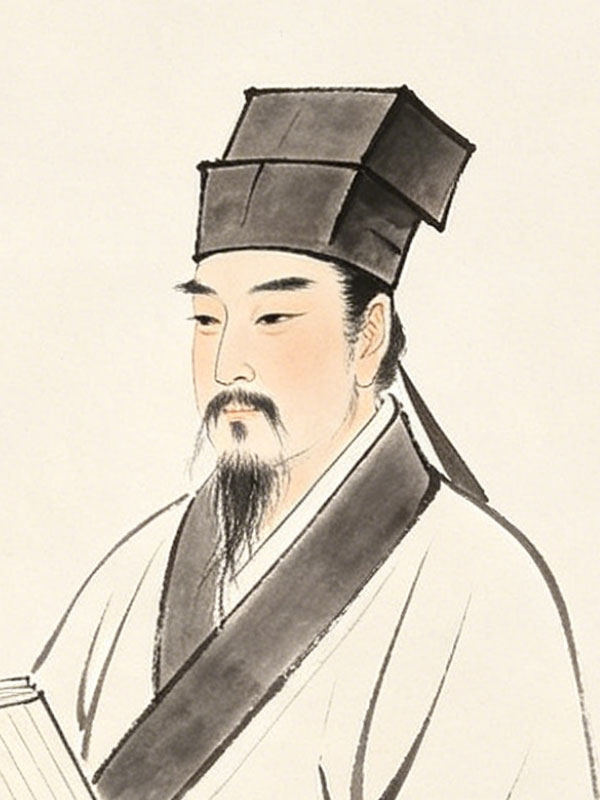
Leng Qian (冷谦): The Immortal Musician and Painter of the Early Ming
Leng Qian (active mid-14th to early 15th century), courtesy name Qijing (起敬) and pseudonym Longyang Zi (龙阳子), was a legendary polymath of the early Ming Dynasty. A native of Hangzhou (or Jiaxing, according to some records), he was a scholar-official, a master musician, a Taoist practitioner, and an influential landscape painter. His life is shrouded in both historical record and supernatural folklore, making him one of the most enigmatic figures in Chinese cultural history.
1. A Master of Ritual Music
Leng Qian played a pivotal role in the early Ming government. Under Emperor Zhu Yuanzhang (Hongwu), he was appointed as the Director of the Court of Imperial Sacrifices (Taichang Sicheng). He was primarily responsible for the reconstruction of ritual music (Yuezhi), ensuring that the court ceremonies adhered to classical Confucian standards. His expertise in the Qin (zither) and his deep understanding of musical theory made him the foremost authority on sound and harmony during the founding of the dynasty.
2. Artistic Style: Scholarly Elegance
In the realm of visual arts, Leng Qian was a refined literati painter. His landscapes were deeply influenced by the Northern Song masters, particularly Li Cheng and Guo Xi. His stylistic hallmarks include:
- Refined Brushwork: His lines were delicate yet firm, avoiding the coarse professional style in favor of a scholarly "plainness" (pingdan).
- Ethereal Atmospheres: He was a master of using light ink washes to depict misty peaks and secluded retreats, often reflecting his Taoist worldview of harmony between man and the cosmos.
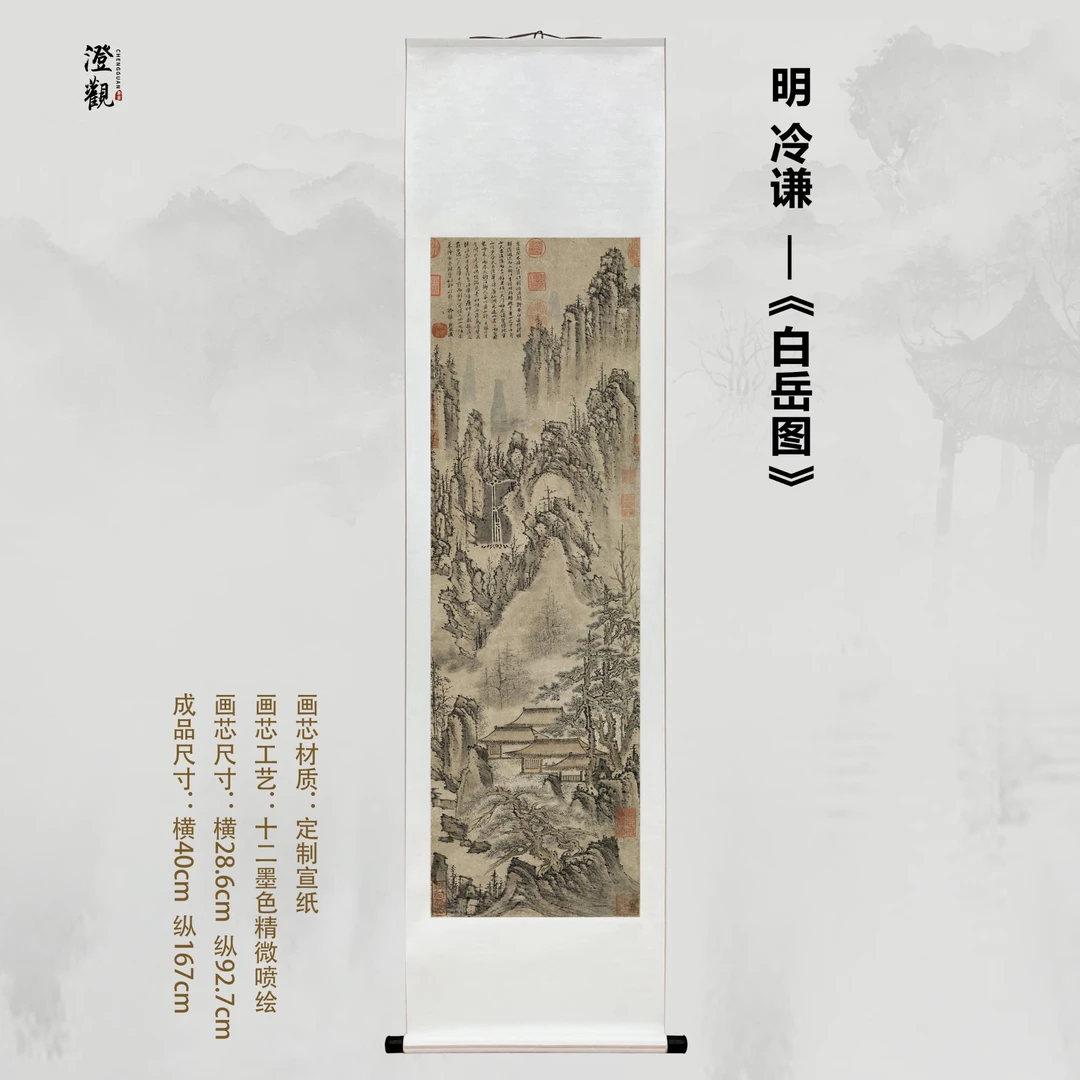
- The Immortal Aesthetic: His most famous surviving work, "Mount Shanyou" (蓬莱仙弈图), showcases his ability to blend mythological themes with realistic landscape techniques, depicting a serene world inhabited by immortals.
3. Taoist Alchemy and Longevity
Leng Qian is perhaps most famous for his legendary longevity. Historical anecdotes suggest he lived well over one hundred years, maintaining the appearance of a middle-aged man. As a Taoist adept, he authored works on health and qigong, such as the "Xiushen Zhizhi" (Guidelines for Cultivating the Body). He was believed to have mastered the art of inner alchemy (Neidan), and his reputation as a "living immortal" significantly enhanced the spiritual prestige of his paintings.
4. The Legend of the "Paint-Pot Escape"
One of the most enduring folk legends surrounding Leng Qian involves his disappearance. Story goes that he was implicated in a corruption scandal involving a friend. When soldiers came to arrest him, he allegedly painted a door on a wall (or a jar) and stepped into it, vanishing from the physical world. While historically dubious, this tale reflects the traditional Chinese belief that a true master’s art is so powerful it can transcend physical reality.
5. Historical Legacy and Influence
While fewer of his works survive today compared to his contemporaries, Leng Qian’s influence remains significant. He represented the ideal Ming scholar: a man who could serve the state through ritual and music while maintaining a private life of spiritual cultivation and artistic expression. His work provided a bridge between the Yuan Dynasty's expressive freedom and the Ming Dynasty's structural refinement, and he remains a favorite subject for those interested in the intersection of art and Taoist mysticism.
— ALL MASTERPIECES LOADED —