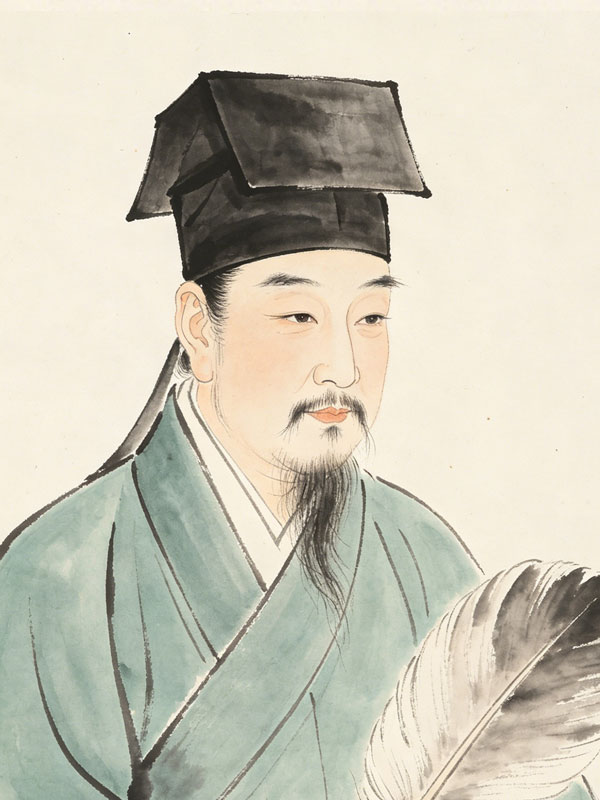
Guan Si (关思): The Resolute Landscape Master of the Late Ming
Guan Si (active late 16th – early 17th century), courtesy name Hezhou (河州) and pseudonym Jiushui (九水), was a highly influential landscape painter during the Wanli period of the Ming Dynasty. A native of Wuxing (modern-day Huzhou, Zhejiang), he was a contemporary of the great theorist Dong Qichang and played a vital role in the transition of literati painting toward the end of the Ming era.
1. Leader of the "Song-Guan" School
In the late Ming art world, Guan Si was frequently paired with his contemporary Song Xu. Together, they were known as the "Song-Guan" duo, representing the pinnacle of landscape painting in the Zhe-Hu region. While the Wu School (centered in Suzhou) was the dominant force, Guan Si’s presence in Huzhou helped maintain that city's status as a major cultural hub, continuing the legacy established centuries earlier by Zhao Mengfu.
2. Artistic Style: A Synthesis of Song and Yuan
Guan Si did not adhere strictly to a single lineage; instead, he was an eclectic master who synthesized various classical traditions. His stylistic hallmarks include:
- Structural Density: Unlike the sparse, minimalist approach of some literati, Guan Si’s landscapes were often dense and complex. He drew inspiration from the Wang Meng tradition of "piled-up" mountains and rich textures.
- Northern Song Grandeur: He looked back to the Li-Guo (Li Cheng and Guo Xi) school, incorporating the monumental scale and "crab-claw" branches into his more modern compositions.
- Vigorous Brushwork: His use of the brush was firm and disciplined, utilizing a variety of "cun" (texture) strokes to give his rock formations a sense of tactile weight and geological reality.
3. Travel and Realism
Guan Si was a prolific traveler, and much of his work was inspired by the actual scenery he encountered across China. This gave his paintings a level of representational accuracy and atmospheric specificity that distinguished him from artists who painted purely from imagination or recycled manual motifs. His depictions of mist-shrouded peaks and winding rivers were noted for their ability to convey the "spirit" of a specific place.
4. Historical Standing and Critical Reception
During the Wanli era, Guan Si’s fame was immense, and his works were highly sought after by elite collectors. However, with the rise of Dong Qichang’s "Southern School" theory, which favored a more calligraphic and amateurish aesthetic, Guan Si’s technical precision was sometimes unfairly criticized as being too "professional" or "laborious" by later orthodox critics. Despite this, modern art historians recognize him as a master of formal construction whose work represents the high point of late Ming craftsmanship.
5. Legacy and Surviving Works
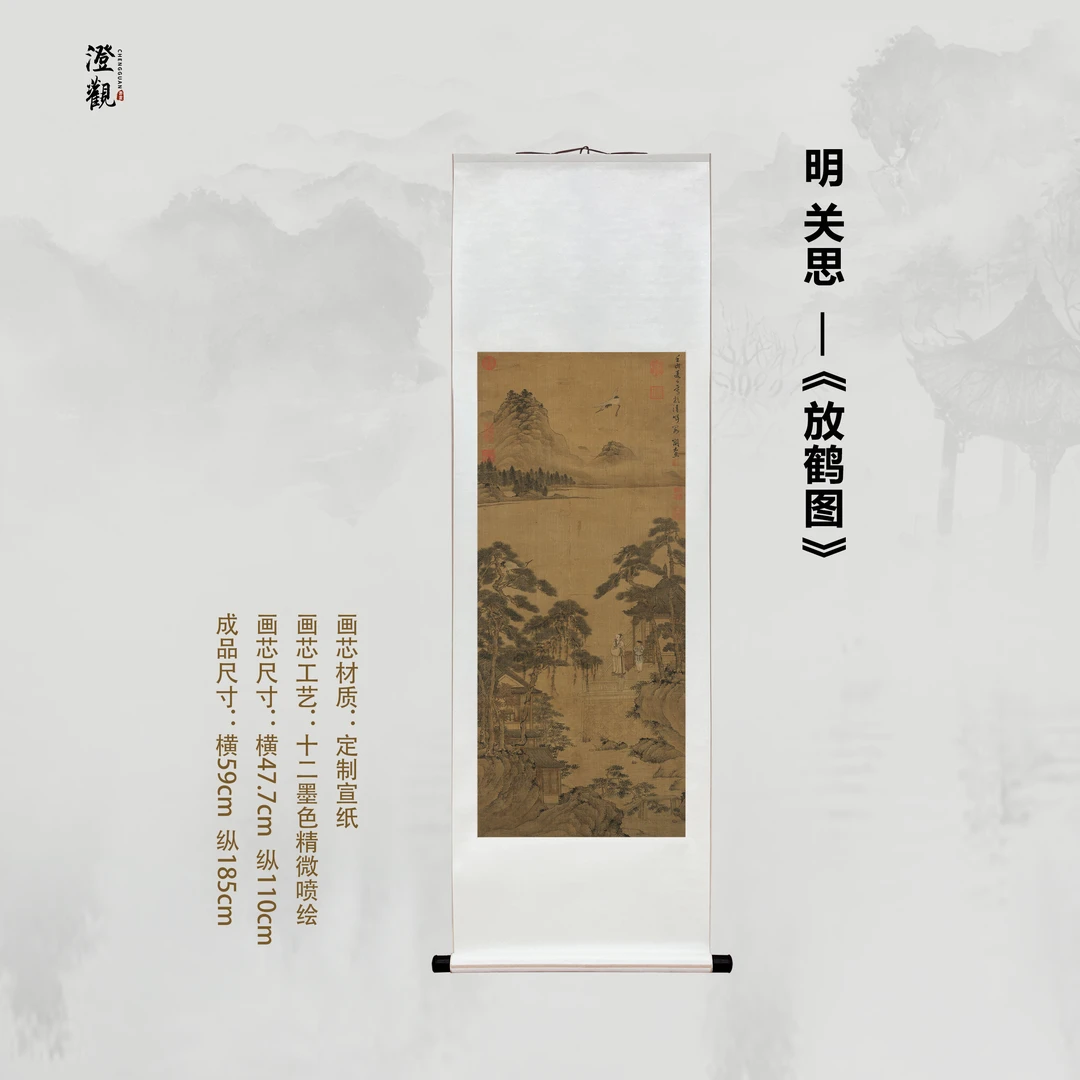
Guan Si’s legacy is preserved in several prestigious institutions, including the Palace Museum in Beijing and the Shanghai Museum. His masterpieces, such as "Mountains in Autumn" and various "Snowy Landscapes," serve as essential examples of how late Ming artists successfully integrated classical revivals with a more individualistic and observational approach to nature.
— ALL MASTERPIECES LOADED —