Famous Seal Carvers and Their Legacy: Masters of Zhuanke
|
The history of zhuanke is rich with the contributions of master seal carvers who have pushed the boundaries of this art form. These artists, renowned for their technical skill, artistic innovation, and unique styles, have left an indelible mark on the tradition of name seal carving. Many of these masters are held in high esteem by the art community, and still continue to inspire carvers today. 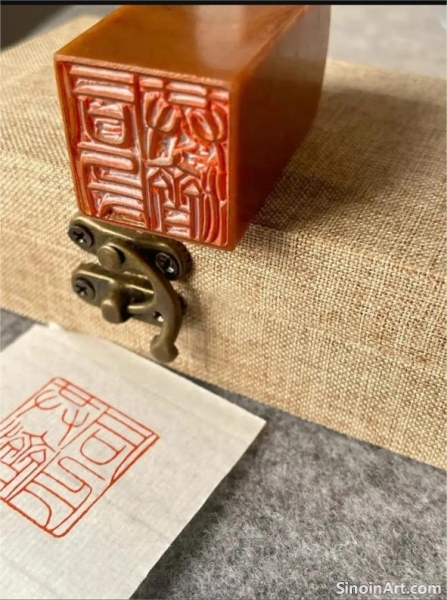 Among the most celebrated seal carvers is Zhao Zhiqian (趙之謙), a Qing Dynasty artist known for his innovative use of seal script and his mastery of both carving and calligraphy. His dynamic compositions and expressive lines greatly influenced later seal carvers. He is considered one of the great masters of seal carving.  Wu Changshuo (吳昌碩), another prominent seal carver of the Qing Dynasty, is renowned for his bold and powerful style. His seals are characterized by their strong lines and vigorous energy, reflecting his mastery of the craft. He is still considered one of the great masters of carving, and his works continue to inspire new artists. Qi Baishi (齊白石), a renowned painter and seal carver of the 20th century, is known for his distinctive and expressive style. His seals are characterized by their simplicity and directness, often incorporating folk motifs and imagery. Qi Baishi brought a new style to seal carving, influenced by folk art traditions. These artists, along with many others, have shaped the tradition of zhuanke, pushing the boundaries of artistic expression and technical innovation. Their works continue to inspire contemporary seal carvers and serve as a testament to the enduring power and beauty of this ancient art form. Their legacy is continued through their surviving works and influence on current artists. The study of these master seal carvers is essential for any serious student of zhuanke. Their works provide invaluable insights into the techniques, aesthetic principles, and cultural significance of seal carving. They represent the heights of artistic expression within the art, and continue to be valuable to contemporary carvers. |
Tag : Famous Seal Carvers, Zhuanke Masters, Chinese Calligraphy Artists, Seal Artists, Seal History
Related information
- The Role of Leisure Seals in Chinese Art and Literature
- The Seal Script: A Calligraphic Foundation of Seal Carving
- Tools of the Trade: Essential Equipment for Seal Carving
- The World of Collector's Seals: An Introduction to Shoucang Yinzhang
- The Art of the Seal: An Introduction to Chinese Seal Carving
This article explores how leisure seals are used in Chinese painting, calligraphy, and literary works, adding a personal touch, aesthetic dimension, and layer of cultural meaning to these art forms.
This article delves into the significance of the seal script (zhuanshu), a form of Chinese calligraphy that serves as the foundation for seal carving, exploring its history, forms, and artistic principles.
This article explores the essential tools and materials used in Chinese seal carving, focusing on the importance of carving knives, stones, ink pads, and other specialized equipment.
This article introduces the concept of Chinese collector's seals, exploring their historical role, cultural significance, and how they function as marks of ownership and connoisseurship.
This article introduces Chinese seal carving, or Zhuanke, as a traditional art form combining calligraphy, carving, and design, highlighting its history, process, and cultural significance.