
Among the treasures of Chinese art history, few periods reach the aesthetic heights of the Song Dynasty. At the heart of this golden age was Zhao Chang (赵昌), a master painter renowned for his revolutionary approach to the Bird-and-Flower (Huaniao) genre. His masterpiece, Four Happiness (Si Xi Tu), remains one of the most celebrated examples of naturalistic painting, blending profound cultural symbolism with unmatched technical precision.
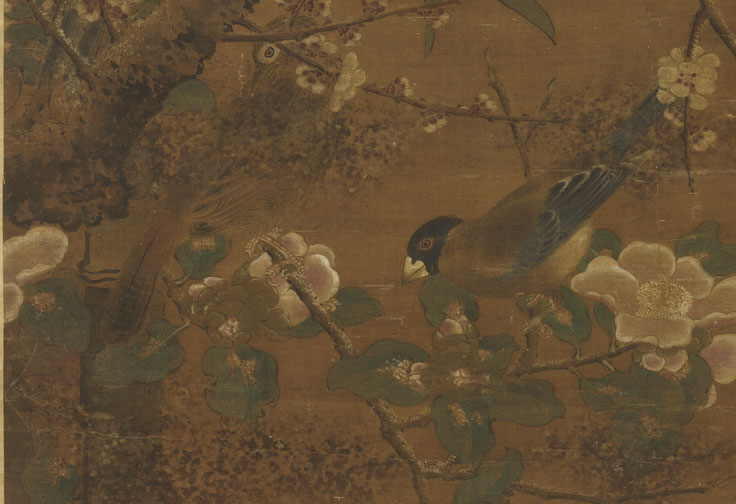
Zhao Chang was a pioneer of the "Xiesheng" (写生) technique, which translates to "sketching from life." Unlike many of his contemporaries who relied on copying ancient manuals, Zhao Chang was famous for observing nature firsthand. Legend has it that he would hold fresh flowers in his hand every morning to capture their dew-kissed vitality. In Four Happiness, this commitment to naturalism is evident in every feather and branch, marking a shift toward objective realism in Chinese art.
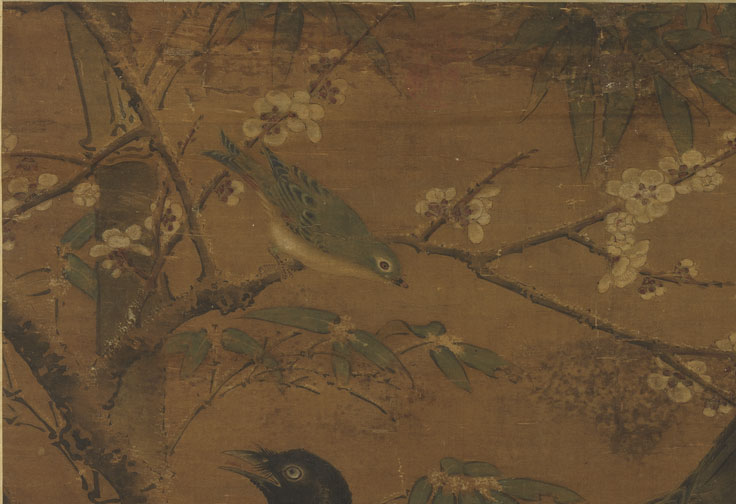
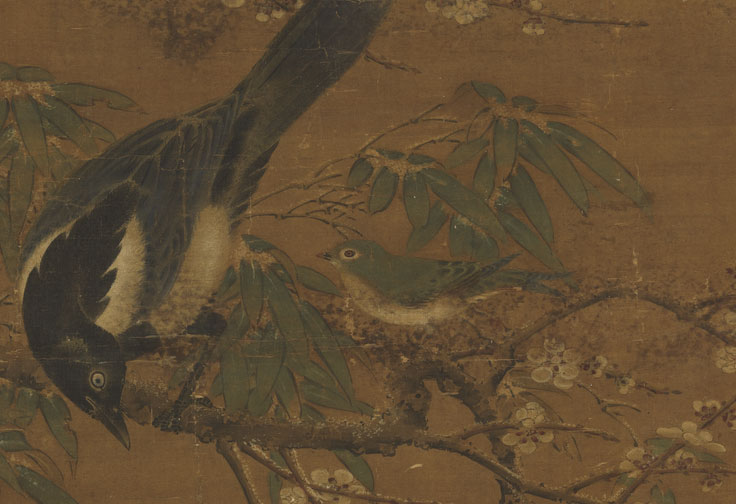
In Chinese culture, the Magpie (Xique) is known as the "Bird of Joy." The title Four Happiness refers to the four magpies depicted in the composition, which traditionally represent the four major blessings in life: Wealth, Longevity, Good Fortune, and Joy. The interaction between the birds—some looking back, others appearing to call out—creates a narrative of harmony and social connection, making this artwork a powerful talisman for a prosperous and happy household.
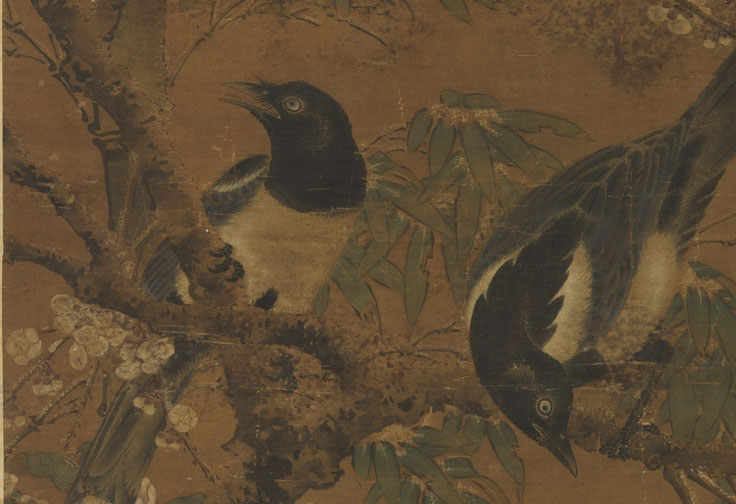
The painting is a masterclass in the Gongbi (工笔) style—a meticulous brush technique that uses highly detailed strokes.
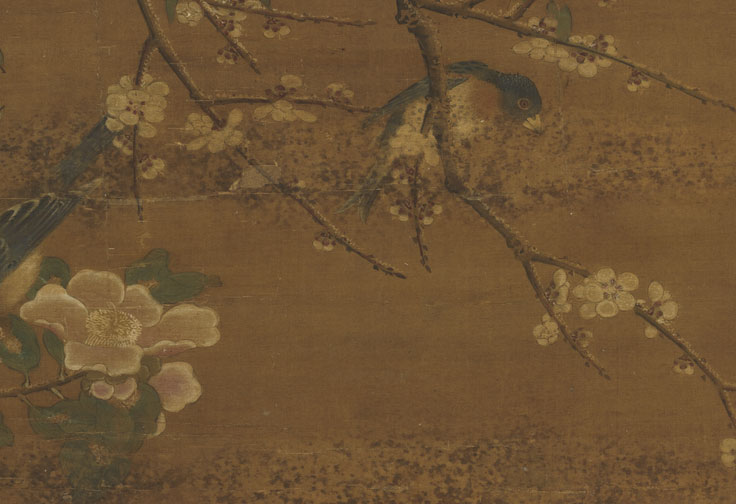
- Plumage: The birds’ feathers are rendered with microscopic detail, showing a soft, tactile quality that contrasts with the sharp, rhythmic lines of the ancient branches.
- Color Palette: Zhao Chang utilized mineral pigments to achieve subtle yet enduring colors. A high-quality 1:1 replica captures the weathered, antique patina of the original silk, preserving the sophisticated, muted tones favored by the Song imperial court.
The composition follows the classic Song Dynasty aesthetic of "Balance through Asymmetry." The gnarled tree branch sweeps across the canvas, creating a dynamic path for the viewer's eye. The negative space (Liu Bai) is as important as the subjects themselves, providing a sense of atmosphere and "air" that allows the lifelike magpies to breathe. This balance creates a profound sense of Zen-like tranquility and timelessness.
Today, 1:1 high-fidelity replicas of Four Happiness are highly prized by collectors and interior designers. They serve as a bridge to the literati culture of ancient China. Owning a reproduction of this caliber is not just about home decor; it is about preserving the cultural heritage of a time when art was a spiritual pursuit. Whether displayed in a modern study or a traditional tea room, it brings an aura of academic sophistication and classical elegance.