
Zhou Wenju (周文矩), a preeminent court painter of the Southern Tang dynasty during the Five Dynasties and Ten Kingdoms period, is renowned for his sophisticated depictions of palace life. His masterpiece, "Ladies Playing Chess and Fishing in a Lotus Pavilion" (荷亭奕钓仕女图), serves as a window into the refined leisure and aesthetic sensibilities of the 10th-century Chinese aristocracy.
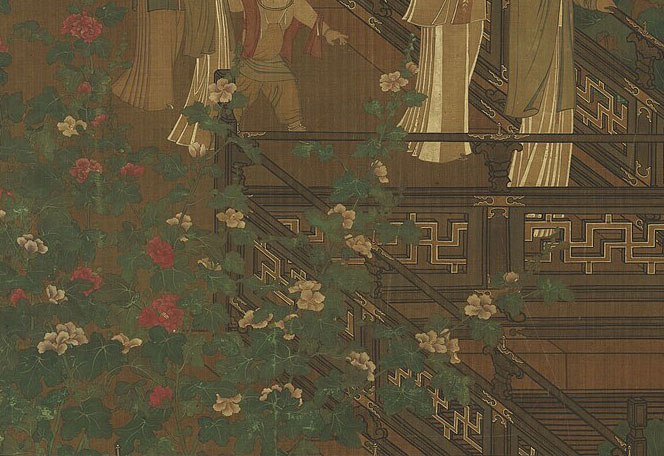
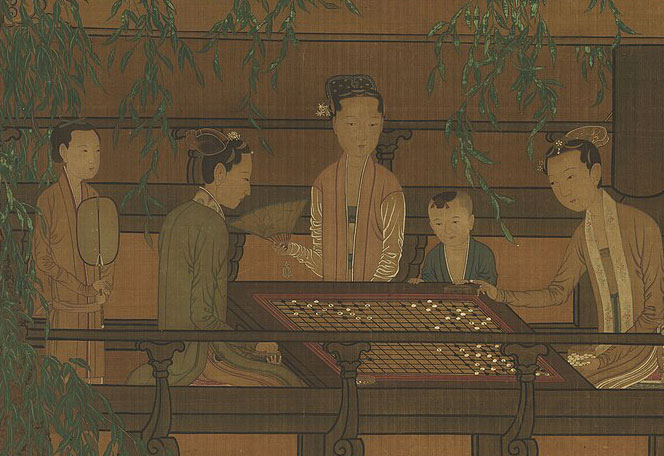
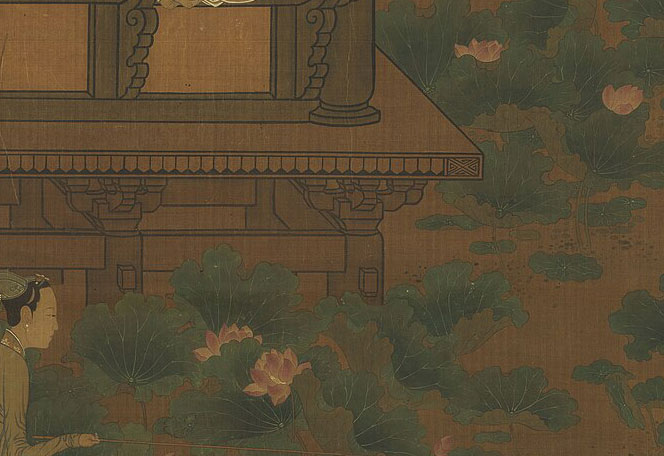
The painting captures a tranquil summer scene within a private imperial garden. The composition is divided into focused groups of court ladies engaged in "elegant gatherings." One group is gathered around a stone table, deeply absorbed in a game of Go (Weiqi), symbolizing intellectual prowess. Nearby, other noblewomen lean over a balustrade, fishing in a pond teeming with blooming lotus flowers. The presence of female attendants and the architectural details of the ornate pavilion emphasize the secluded and privileged nature of their lives.
Artistically, Zhou Wenju is most famous for his invention or mastery of the "Zhanbi" technique (战笔), often translated as "tremulous brushstrokes" or "warping lines." Unlike the smooth, fluid lines of the earlier Tang masters, Zhou used a rhythmic, slightly shaking motion to create jagged yet forceful outlines. This technique is particularly evident in the drapery of the robes, giving the silk garments a sense of weight, texture, and dynamic movement that distinguishes his work from the "Iron-Wire" style of his predecessors.
While Zhou Wenju inherited the tradition of "Shinv" (court lady) painting from Tang masters like Zhou Fang, he introduced a significant stylistic shift. The figures in this scroll move away from the "plump and opulent" ideal of the High Tang. Instead, Zhou portrays women with slender forms and more individualized facial expressions. There is a subtle emphasis on their inner emotional world, capturing a sense of melancholy or quiet contemplation amidst their leisurely activities.
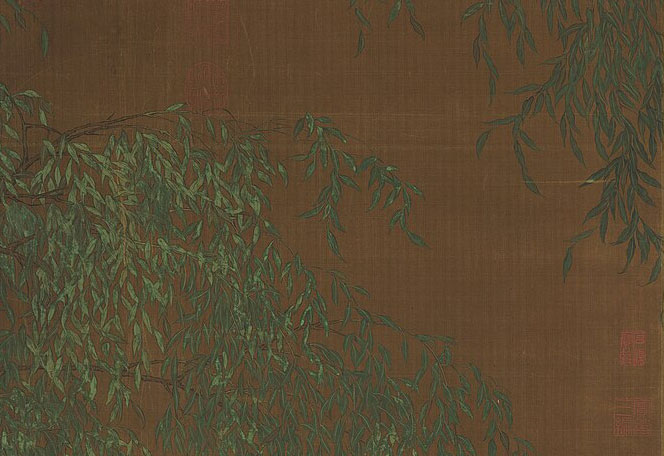
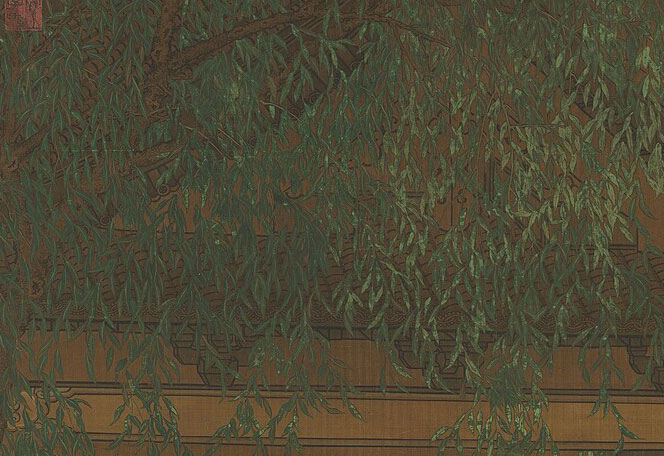
The painting demonstrates an advanced understanding of spatial depth. By utilizing the diagonal lines of the pavilion railings and the strategic placement of ornamental rocks (Taihu stones), Zhou creates a three-dimensional stage for his subjects. The lush greenery and the delicate rendering of the lotus leaves provide a cool, atmospheric backdrop that contrasts with the intricate patterns of the ladies' embroidered clothing, showcasing a harmonious balance between nature and human artifice.
As a Hanlin Academician under the Last Emperor Li Yu, Zhou Wenju’s work reflects the "Golden Age" of Southern Tang culture. "Ladies Playing Chess and Fishing in a Lotus Pavilion" is not merely a decorative piece; it is a cultural document illustrating the high-society customs, fashion, and furniture of the era. It bridges the gap between the robust realism of the Tang and the poetic naturalism of the Song Dynasty, making it a pivotal work in the history of Chinese classical painting.