
In the illustrious history of Chinese art, the Southern Song Dynasty represents a peak of refined elegance and technical perfection. Among its most celebrated masters was Zhao Boju (赵伯驹), a member of the imperial family whose work bridged the gap between the grandeur of the Northern Song and the intimate lyricism of the South. His masterpiece, Feixian Tu (飞仙图), or "Painting of Flying Immortals," stands as a definitive example of the Blue-and-Green Landscape (Qinglu Shanshui) tradition, infused with Taoist mysticism and celestial wonder.
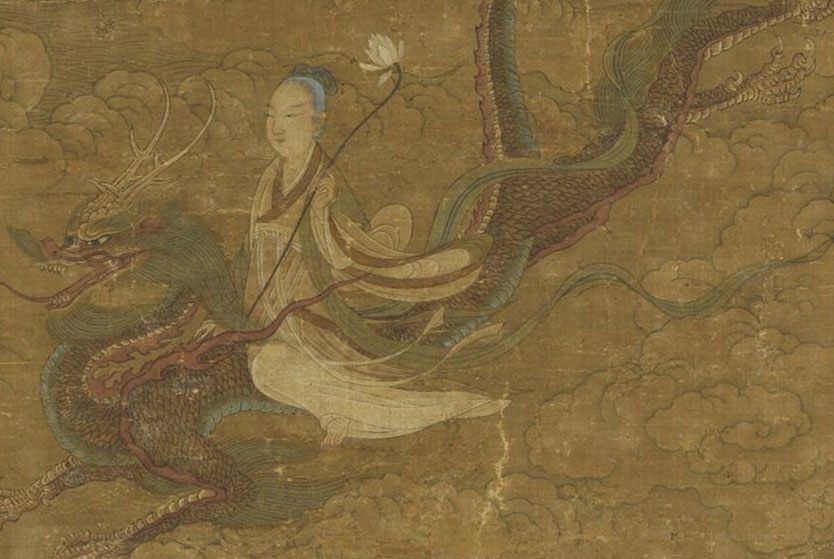
Zhao Boju, also known by his style name Qianli, was highly favored by Emperor Gaozong. He is credited with reviving and refining the heavy-color landscape style that originated in the Tang Dynasty. Unlike the monochrome ink washes favored by many literati, Zhao Boju utilized expensive mineral pigments such as malachite green and azurite blue. In Feixian Tu, his royal pedigree is evident in the painting’s aristocratic sophistication and meticulous attention to detail, creating a world that feels both physically solid and spiritually transcendent.
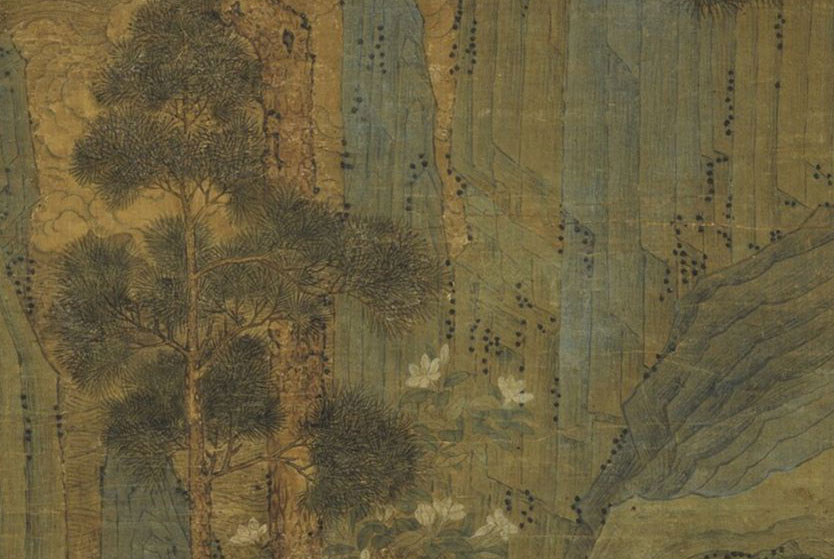
The Blue-and-Green Landscape style of Feixian Tu is not merely decorative; it is symbolic of the Abode of the Immortals.
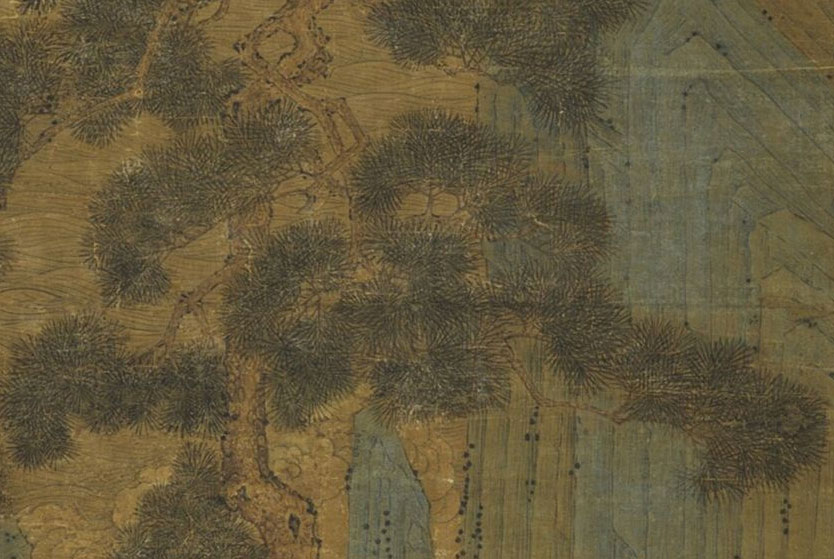
- Mineral Pigments: The vibrant blues and greens represent the eternal vitality of the celestial mountains, which do not wither or age like the mortal world.
- Gongbi Technique: Zhao Boju employed the Gongbi (工笔) or "meticulous brush" technique to render every pine needle, cloud ripple, and silken robe with microscopic precision.
- Golden Outlines: The subtle use of gold or "iron-wire" lines adds a shimmering, supernatural quality to the peaks, suggesting a landscape illuminated by a divine light.
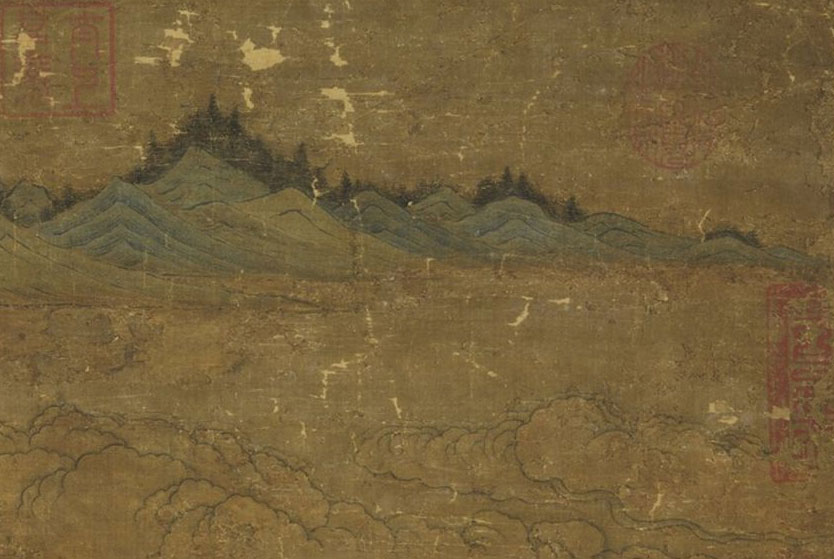
The title Feixian Tu translates to "Flying Immortals," reflecting a deep fascination with Taoist alchemy and the pursuit of eternal life. The painting depicts celestial beings traversing through ethereal mists and jagged, fantastic rock formations. These immortals are often accompanied by cranes—symbols of longevity—and are shown playing flutes or wandering near ancient pines. The landscape itself acts as a spiritual map, guiding the viewer’s eye from the mundane valley floors up to the soaring peaks where heaven and earth meet.
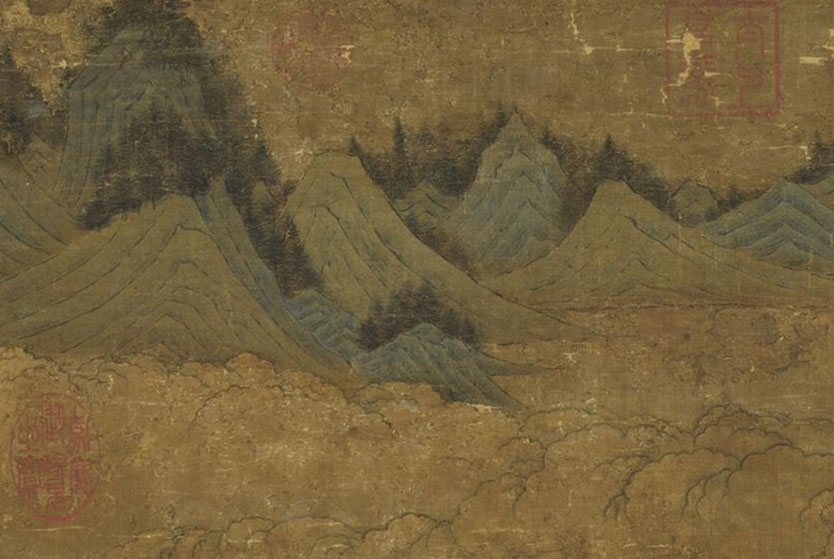
Zhao Boju masterfully applied the "Three Distances" (Sanyuan) theory of Chinese composition. In Feixian Tu, he emphasizes "High Distance" (Gaoyuan) to make the celestial mountains appear daunting and magnificent. However, he breaks the tension with rolling mists and negative space, which represent the void (Kong) of Taoist philosophy. These "sea of clouds" allow the heavy mineral colors to breathe, creating a dynamic equilibrium between the solid rocks and the fleeting, flying spirits.
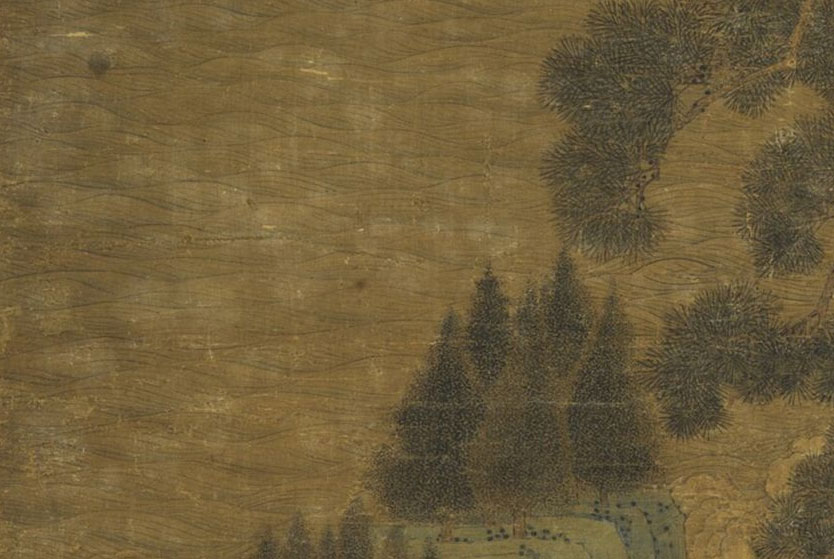
The influence of Feixian Tu cannot be overstated. It set the standard for the courtly style of the Southern Song and deeply influenced later Ming Dynasty masters like Qiu Ying and Wen Zhengming. To collectors, a 1:1 replica of this work is a gateway into the literati imagination of the 12th century. It represents a time when art was used to visualize the invisible realms of immortality and peace. Owning such a piece is an act of cultural preservation, celebrating a master who could turn mineral stones into a vision of the heavens.