
Han Huang (723–787 AD), a distinguished chancellor of the Tang Dynasty, was not only a powerful statesman but also a pivotal figure in Chinese art history. While widely celebrated for his "Five Oxen," his work "Treading Through Snow to Look for Plum Blossoms" (Taxue Xunmei Tu) stands as a profound exploration of literati themes and winter landscapes.
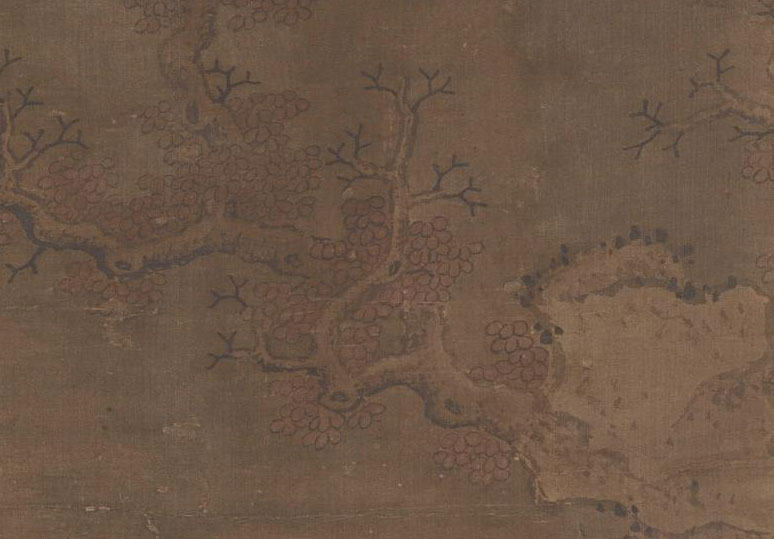
The painting depicts a scholar-official journeying through a desolate, snow-covered terrain. The narrative centers on the poetic act of seeking the first plum blossoms of the season. This "quest" is more than a physical journey; it represents the intellectual pursuit of beauty and spiritual transcendence amidst the harsh realities of the world.
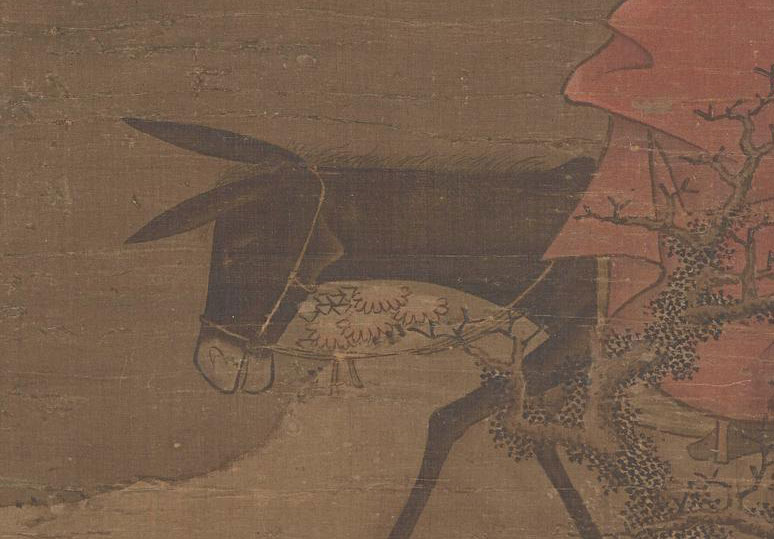
Han Huang utilized a sophisticated blend of fine-line brushwork (Gongbi) and nuanced ink washes. The weight of the accumulated snow is masterfully suggested through negative space (leaving the silk or paper blank), a technique that creates a sense of silence and frozen stillness. The figures are rendered with expressive precision, their posture reflecting the biting cold and their inner determination.
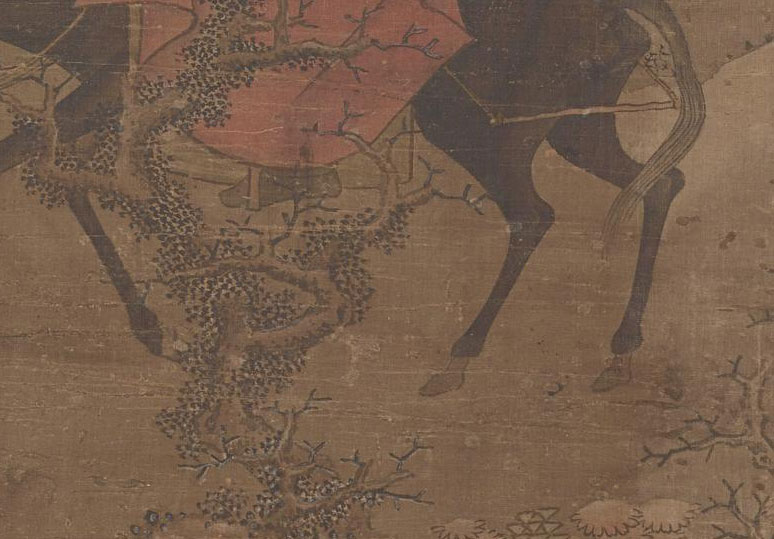
In the Chinese cultural lexicon, the plum blossom is a primary member of the "Four Gentlemen." Because it blooms in winter, it is a potent symbol of unyielding spirit, moral integrity, and purity of character. By "treading through snow" to find them, the protagonist aligns himself with these Confucian virtues, signaling a refusal to succumb to external pressures or "seasonal" hardships.
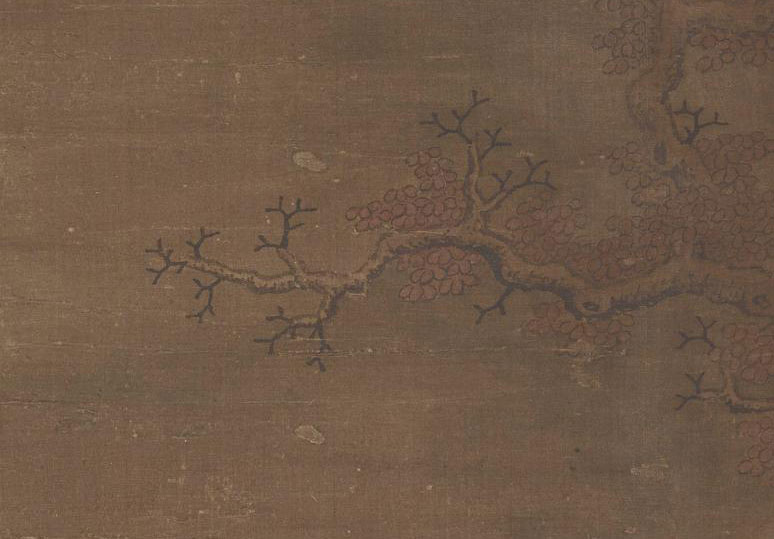
This work significantly influenced the winter landscape genre for centuries. The motif of a scholar on a donkey or a lone traveler in the snow became a staple of Song and Ming Dynasty paintings. Han Huang’s ability to imbue a landscape with human emotion and philosophical depth helped pave the way for the literati painting tradition that would dominate Chinese art history.