
In the pantheon of Chinese landscape painting, the Southern Song Dynasty occupies a place of profound elegance and technical brilliance. At the forefront of this era was Zhao Boju (赵伯驹), a member of the imperial clan whose works transformed the Blue-and-Green Landscape (Qinglu Shanshui) into a vehicle for royal prestige and spiritual yearning. His masterpiece, Xianshan Louge (仙山楼阁), or "Immortals' Palaces in the Fairy Mountains," represents the absolute pinnacle of architectural precision blended with celestial naturalism.
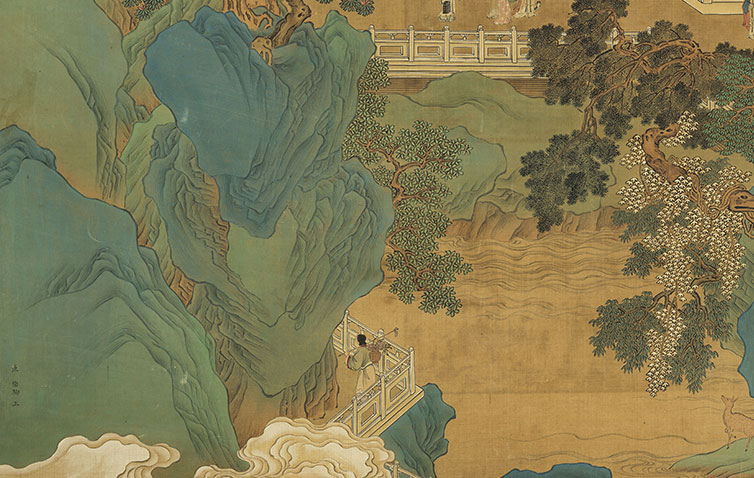
Zhao Boju, known by his style name Qianli, was a direct descendant of the Song imperial family and a personal favorite of Emperor Gaozong. Because of his royal status, his paintings carry an aristocratic air that distinguishes them from the works of contemporary literati. In Xianshan Louge, Zhao Boju revived the heavy-color techniques of the Tang Dynasty, infusing them with the Southern Song's refined sensitivity. He is celebrated for bridging the gap between the monumental landscapes of the North and the lyrical, intimate scenes of the South.
The most striking feature of Xianshan Louge is its use of the Qinglu Shanshui style. This technique relies on mineral pigments such as malachite green and azurite blue to create a landscape that glows with an inner light.
- Mineral Depth: These pigments do not fade over time, giving the celestial mountains a permanent, jewel-like quality.
- Gold Outlining: The subtle application of gold heightens the imperial opulence, suggesting that the mountains themselves are repositories of divine wealth.
- Chromatic Harmony: The contrast between the deep blues of the peaks and the vibrant greens of the valleys creates a supernatural atmosphere that signifies the realm of the immortals.
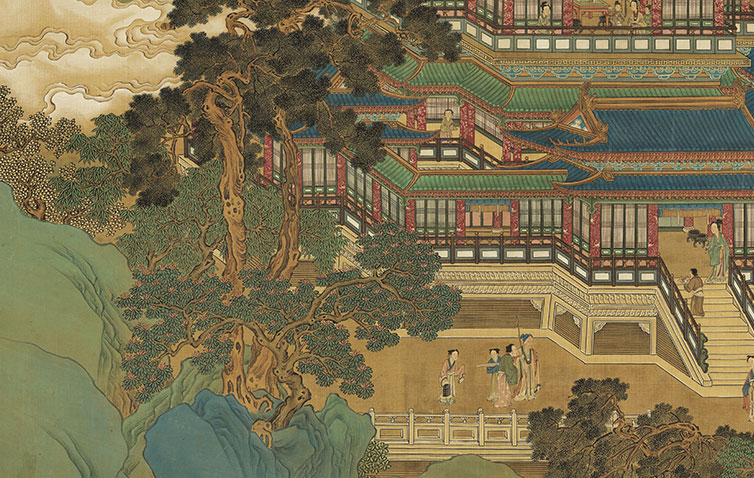
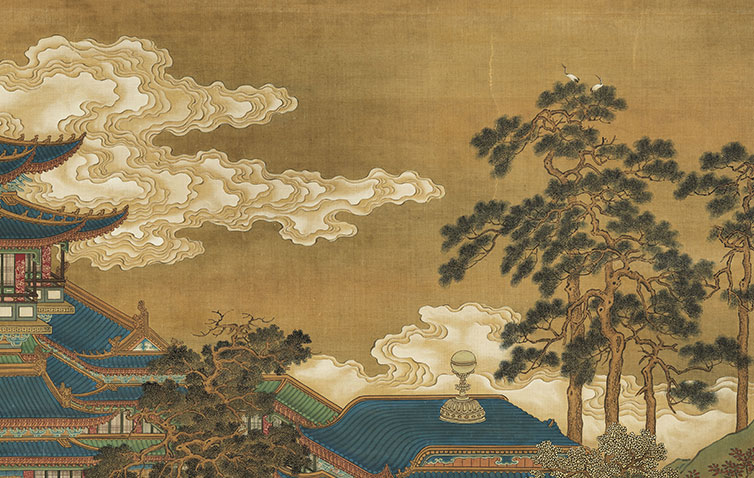
Zhao Boju was a master of Jiehua (界画), often translated as "boundary painting" or "architectural painting." This style involves the use of a ruler and specialized brushes to achieve mathematical accuracy in depicting structures. In Xianshan Louge, the multi-storied pavilions and winding corridors are rendered with such Gongbi (meticulous) detail that one can almost count the tiles on the roofs and the railings on the balconies. This structural realism provides a grounding contrast to the floating, ethereal mists that surround the buildings.
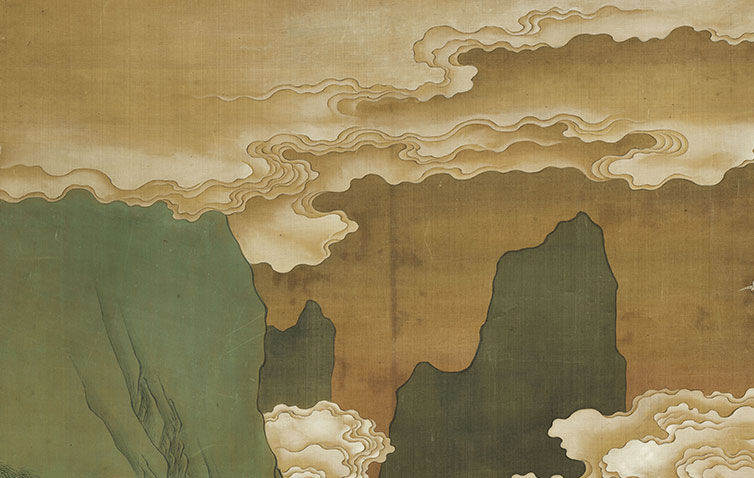
The subject matter of Xianshan Louge is deeply rooted in Taoist mythology. The "Fairy Mountains" (Xianshan) refer to the legendary isles of the immortals, such as Mount Penglai, where death does not exist.
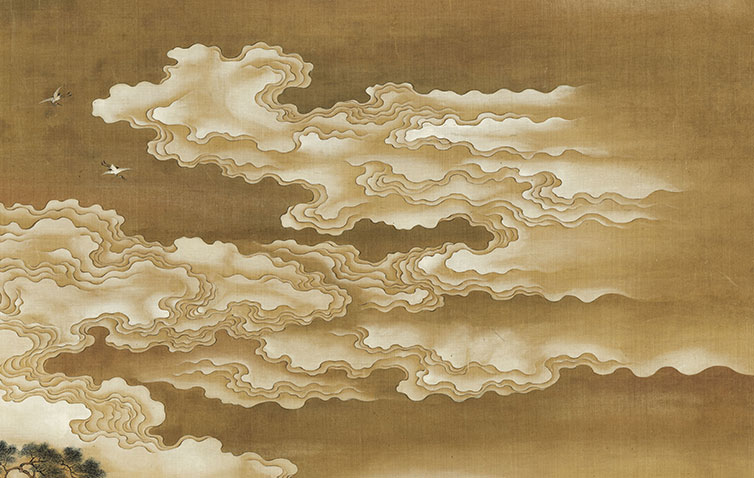
- Celestial Abodes: The elaborate palaces perched precariously on jagged cliffs represent the residences of those who have attained Taoist transcendence.
- Spiritual Voyage: The winding paths and bridges suggest a spiritual journey, inviting the viewer to wander mentally through the mist-shrouded peaks toward a state of enlightenment and peace.
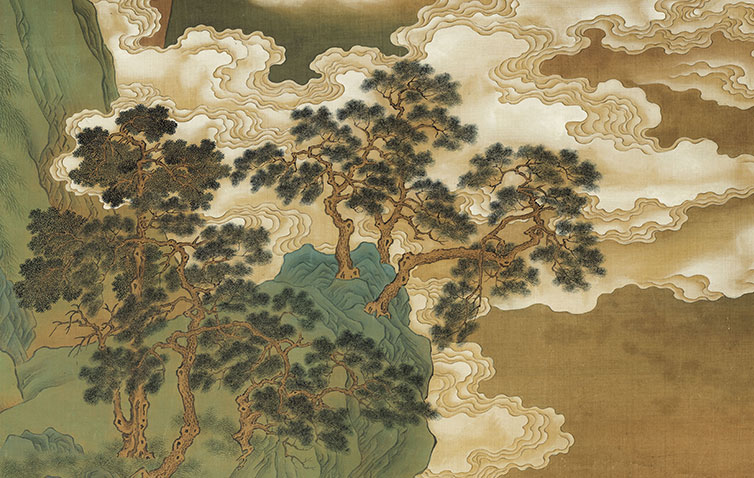
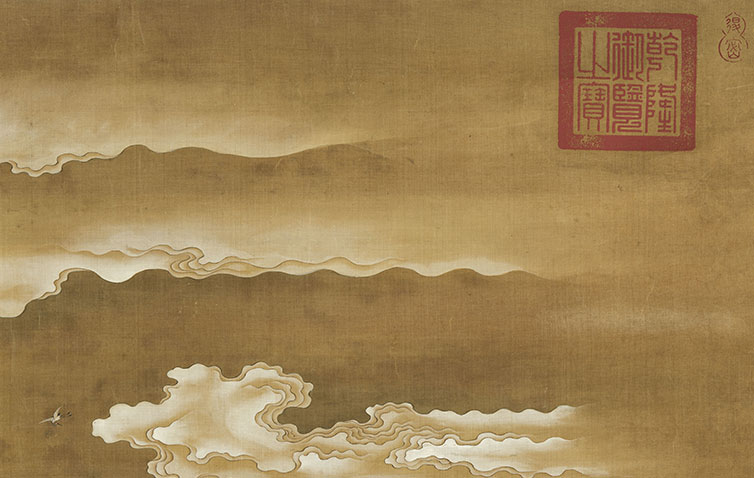
The composition of Xianshan Louge utilizes the classic Chinese shifting viewpoint, allowing the eye to travel across multiple narrative planes. Zhao Boju masterfully uses negative space (Liu Bai) in the form of swirling mists to separate the mundane world from the divine. This creates a sense of infinite depth and "air," preventing the dense mineral colors and intricate architecture from feeling overwhelming. The result is a harmonious balance between the man-made and the natural, the solid and the void.
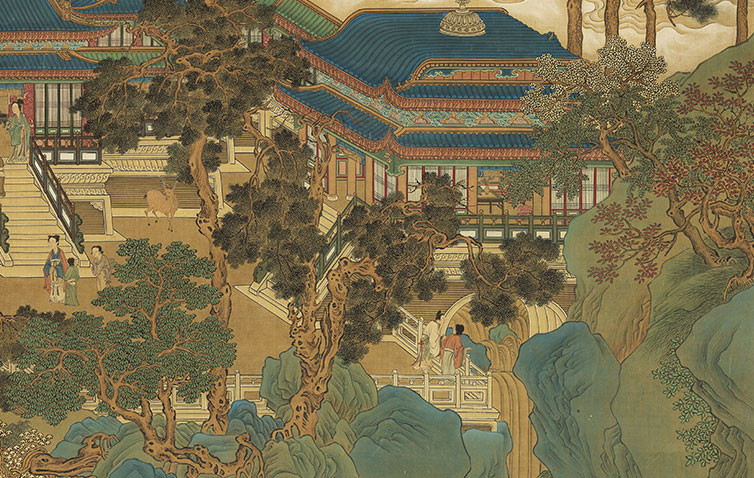
For centuries, Xianshan Louge has been a reference point for painters seeking to combine landscape with architecture. Its influence can be traced through the Ming and Qing dynasties, particularly in the works of Qiu Ying. Today, a 1:1 high-fidelity replica of this masterwork is highly sought after by those who appreciate classical aesthetics. Owning a reproduction that honors the original scale and color intensity is like owning a piece of the imperial Southern Song court, offering a daily gateway into a world of timeless beauty and spiritual grace.