
The Five Oxen (五牛图) is a world-renowned handscroll painting by Han Huang (723–787), a prominent statesman and painter of the Tang Dynasty. As one of the "Ten Masterpieces of Ancient Chinese Painting," it holds a unique position in art history. It is recognized as the earliest surviving painting on paper in China, providing invaluable insight into the transition of painting mediums from silk to paper during the 8th century. It is currently preserved in the Palace Museum in Beijing.
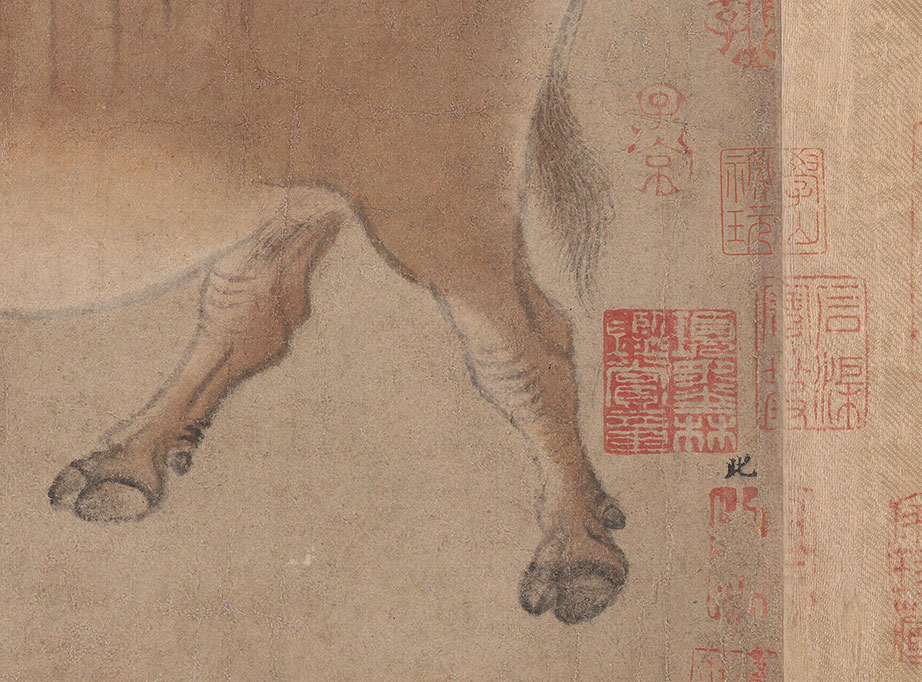
The painting features five oxen in a horizontal line, each possessing a distinctive posture and personality. The artist's mastery is evident in the following details:
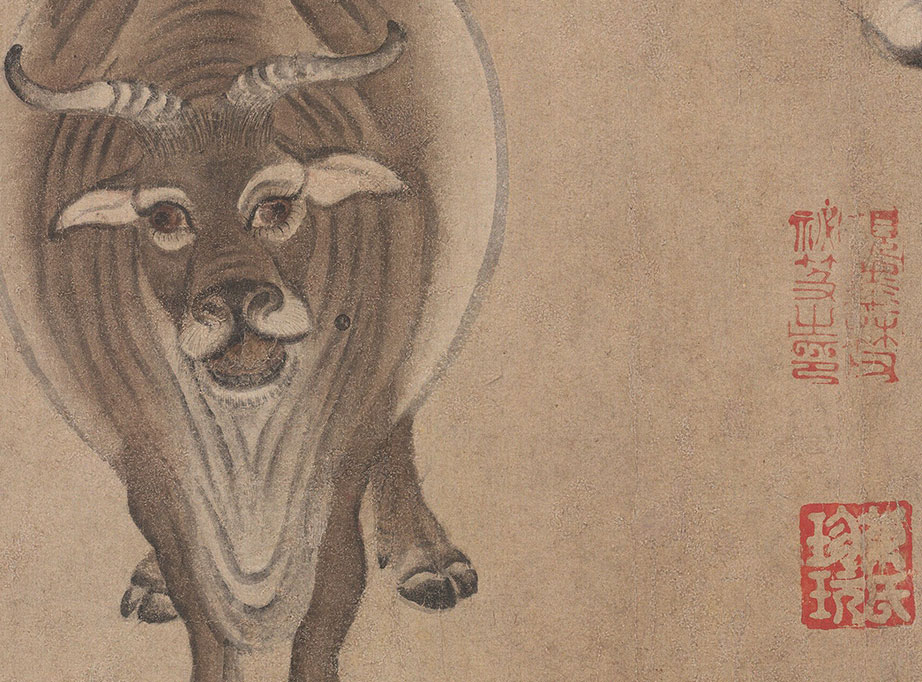
- Realistic Anatomy: Han Huang used the "Iron-wire line" (铁线描) technique—fine, firm, and forceful brushstrokes—to accurately depict the skeletal structure and muscular tension of the animals.
- Perspective and Form: The third ox is particularly famous for its frontal view, a rare and difficult perspective in early Chinese art that demonstrates the artist's command over foreshortening and three-dimensional space.
- Vivid Expressions: From the grazing ox to the one looking back and licking its nose, the painting captures naturalistic behavior, making the animals appear "alive" rather than static symbols.
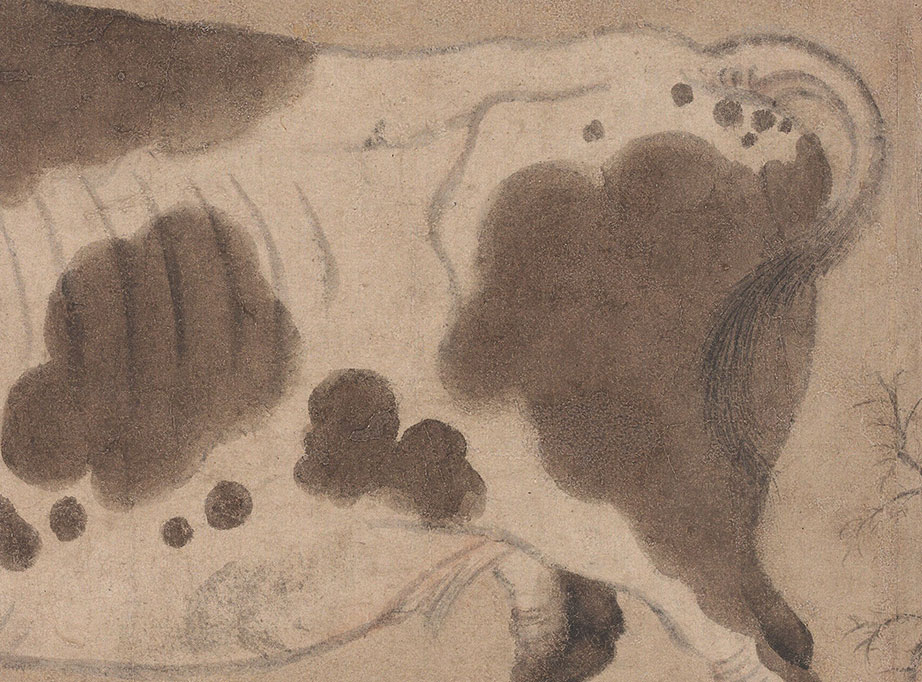
- Minimalist Background: The absence of a complex landscape ensures that the viewer’s focus remains entirely on the texture of the fur and the character of the oxen.
In ancient Chinese culture, the ox was a symbol of diligence, endurance, and agricultural prosperity. Scholars suggest that the Five Oxen is more than a nature study; it is a political metaphor. As a high-ranking official, Han Huang likely used the ox to represent the ideal official—loyal, hardworking, and steady. The fifth ox, which wears a rein, is often interpreted as a symbol of restraint and service to the throne, reflecting the artist’s own dedication to the state.
IV. Historical Provenance and Recovery
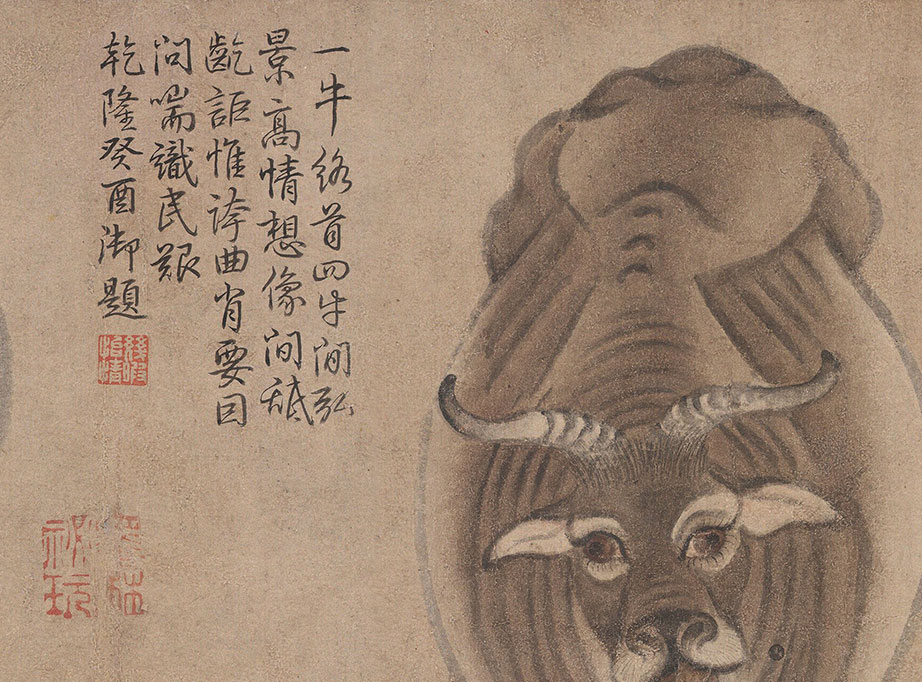
The scroll’s provenance is meticulously documented through numerous collector seals and inscriptions, including those of Emperor Qianlong of the Qing Dynasty, who prized it dearly. Following the Eight-Nation Alliance invasion in 1900, the masterpiece was looted and lost abroad. Its return is a legendary story in Chinese heritage conservation: in the early 1950s, the Chinese government, alerted by a patriotic collector in Hong Kong, spent a significant sum to re-purchase the painting, ensuring its return to the Forbidden City.
The Five Oxen remains the gold standard for animal painting in East Asia. It bridged the gap between the decorative styles of the early Tang and the literati paintings of later periods. Its blend of technical precision and spiritual depth continues to inspire calligraphers and painters who study its brushwork to understand the essence of Chinese ink wash realism.